 Recipe by Ninnalemon
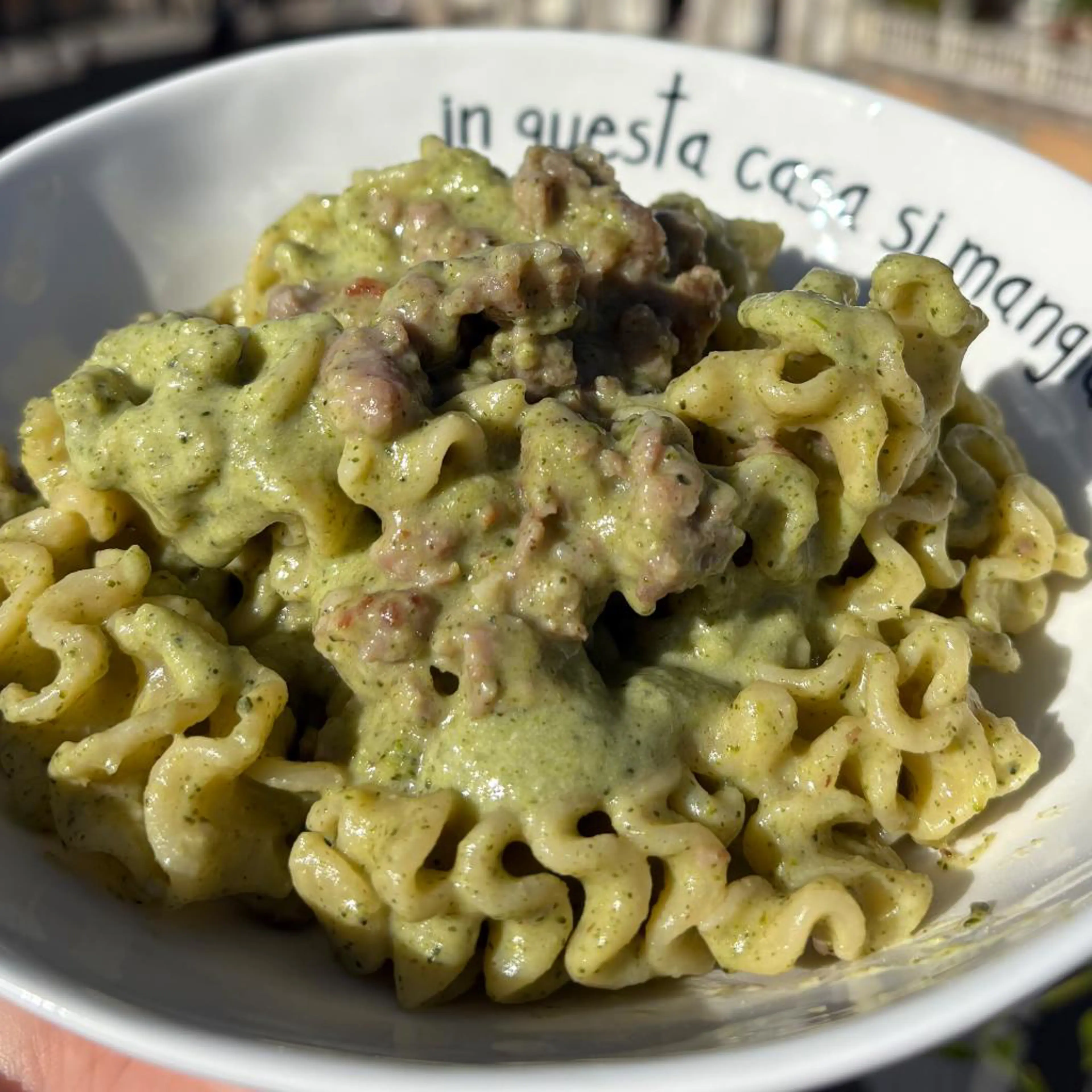
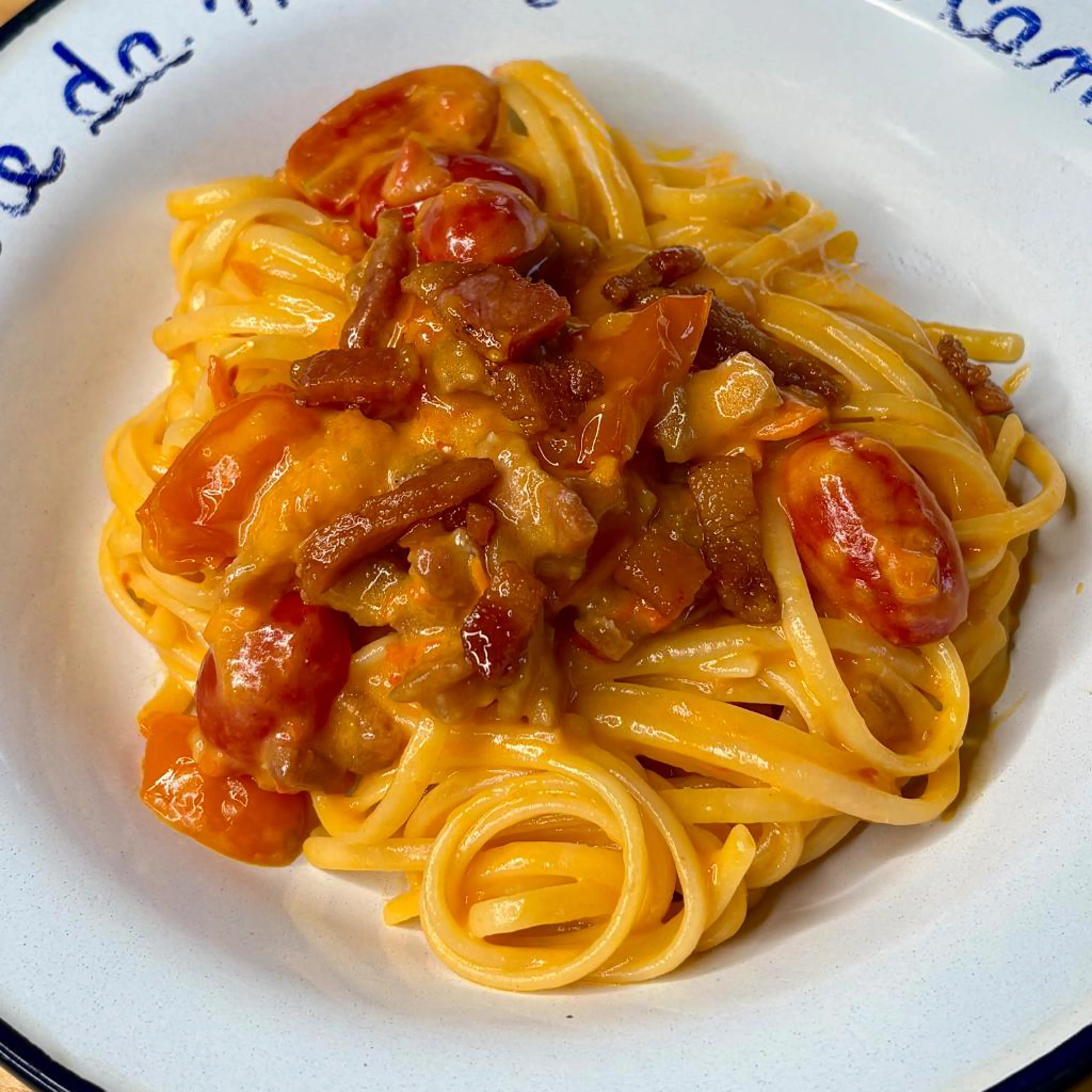
A creamy and flavorful pasta dish combining the sweetness of cherry tomatoes, the smoothness of Taleggio, the intense flavor of Parmesan and the crispiness of guanciale. A rich and original variation on classic tomato pasta, ready in a few simple steps.
Portion: the weight of the ingredients divided by 2 portions, excluding ingredients marked “to taste” and those not considered by the analysis, such as broth. It does not change with the portion selector.
Step 1 of 8: Halve the datterini tomatoes and cut the guanciale into strips or small cubes so that they cook evenly.
Step 2 of 8: Brown the guanciale in a large pan without adding oil until golden and crispy. Transfer it to a paper towel-lined plate and set aside.
Step 3 of 8: In the same pan, cook the tomatoes over medium heat, seasoning them lightly with salt, until soft and they have released their sauce.
Step 4 of 8: Take some of the tomatoes and blend them with the Taleggio and Parmesan until smooth and homogeneous.
Step 5 of 8: Cook the pasta in plenty of salted water and drain it al dente, reserving a ladleful of the cooking water.
Step 6 of 8: Transfer the pasta directly to the pan with the remaining tomatoes and add the Taleggio and tomato cream.
Step 7 of 8: Toss the pasta over low heat, adding a little cooking water if necessary, until creamy and velvety.
Step 8 of 8: Top with the crispy guanciale, mix gently and serve the pasta immediately while hot.

In summary: Not suitable for vegans · Not suitable for vegetarians · Not suitable for pescatarians · Contains lactose · Contains nickel · Allergens detected: Gluten and Milk and dairy products
In gray: not detectedDetected
| Average values | Per serving355 g · 1 of 2 | Per 100 g |
|---|---|---|
| Energy | 3,560 kJ851 kcal | 1,003 kJ240 kcal |
| Fat | 46.7 g | 13.16 g |
| of which saturated fatty acids | 10.61 g | 2.99 g |
| Carbohydrates | 78.4 g | 22.09 g |
| of which sugars | 7.9 g | 2.23 g |
| Fibre | 3.05 g | 0.86 g |
| Protein | 32 g | 9.02 g |
| Salt | 0.69 g | 0.19 g |
Calculated based on the recipe ingredients: it does not take traces or the composition of the products you use into account. Automatic analysis, limited to certain aspects: it may contain errors, so always check the label.